|
|
|
|

For all of you dog lovers out there, there is a perfect opportunity awaiting for you to take your love for dogs and turn it into a business! The world may be seeing a recession but pet spending is not in a recession!
What does that mean for you? It means that a business or franchise in the pet services industry could be a perfect choice for you! Imagine if you could start your own online pet supply store! Not only would it be fun, but a pet business would be very profitable!
i love pets is making it possible for dog and pet lovers across the globe to start and run a great pet business from home!



Dogpile is now offering a free download of their popular search engine toolbar and will be donating to American Society for the Prevention of Cruelty to Animals.

The San Francisco SPCA has warned dog owners their Vet hospital has saw a huge increase in Parvovirus this month.


Stress and anxiety in dogs of all ages can cause a number of behavioral problems and can be quite common, especially when there is a change in the pets routine, for example when moving to a new home or when the owners are away for long periods. There are a number of things that can trigger behavioral problems and this can be things such as fireworks, gunshots or airplanes – anything that may startle or scare the animal.
A sign of stress could be trembling, hiding scratching or being destructive and this can bring on frustration experienced by the pet owner through having to deal with a pet with these issues. It can be quite common and is perfectly natural, although there are a number of products that can help relieve stress and anxiety in dogs.
Once this sort of behavior begins, it is very difficult to stop and this can cause the symptoms and the problems to progressively become worse but there are treatments available to help dogs deal with these situations a lot better.
One treatment is behavior modification techniques but this is not always successful. It is important that owners of these pets notice and recognize the behaviors which may lead to some of the unwanted behavior. One behavior that is triggered and made worse daily is separation anxiety and this is encouraged by owner’s daily routines.
[caption id="attachment_2295" align="aligncenter" width="573"]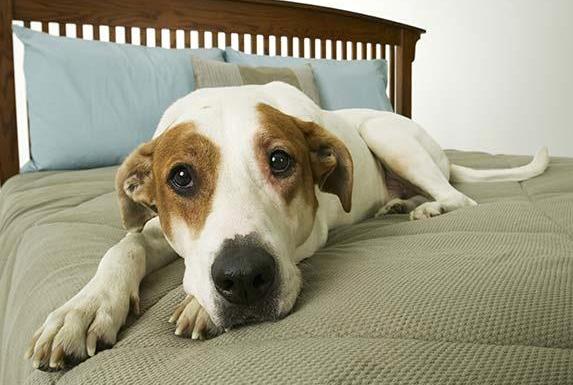 Dog who suffer from stress and anxiety[/caption]
This is made worse through the owners making a real fuss over their pets before their leave when they should help the pet get settled. Zylkene is a natural product that comes from Casein and is a protein in milk. It is the molecule that helps to relax and calm down newborns. It can be used for short term problems such as travel anxiety but it can also be used for long term anxiety such as the addition of a new baby. It can be given as a whole capsule or by opening the capsule and mixing the contents with food or water. As this is a natural product there are no side effects and it can be used with other medications as there are no known interactions with other drugs.
Another option is Pheromone therapy and it is available for cats as well as dogs. The options for dogs include the same pheromone that the mother produces after giving birth and it helps to reassure and calm down puppies, which comes in the form of the Adaptil diffuser.
For cats, the equivalent product is Feliway. The Feliway pheromone is a synthetic version of the cat’s facial pheromone which it uses to mark territory. The option for dogs can be used via a collar, through a spray or a diffuser. The products for cats come in a spray or as the Feliway diffuser. It does not work in all situations but when it is successful it helps to make pets happier and a lot calmer.
One final therapy for dogs is ‘Thundershirt’ which is used to ease anxiety and it does so by applying a gentle pressure to their nervous system to help create a calming effect. It is an effective way of helping the animal without the need for medication.
There are many options available for cat and dog owners and all have the same desired outcome which is to make a pet happier and healthier.
Photo Source:allivet.blogspot.com

American Pit Bull Terriers are the most recent victims of receiving an undeserved reputation due to bad publicity revolving around the breed. Known for fighting and often portrayed as a “bad dog” that sports a spiked collar and chain, American Pit Bull Terriers can become faithful, lifelong companions and have been known to be very gentle and loving animals.

If you’re using a dog walking service to walk your dog, you probably know that light panic feeling you get when your dog is on her walk: is the dog walker doing his job properly? Is he trust worthy? Will your dog get enough exercise during her walk? All these questions and concerns can be answered today with the help of a new dog walking service: Swifto Dog Walking.

The difference between premium pet foods and your standard pet foods are simple: the price, and the quality. You are paying for that extra dose of love and attention that these companies have put into the product, and I’m sure that, as a valued member of your family, your pet will appreciate the high standards. The people at James Wellbeloved make pet foods for your dog, your cat, and even your ferret, and always make sure that their high standards in quality get passed on to your pet. After all, you wouldn’t want to eat cheap, processed food, so why would your pet?

Pet health is becoming an increasingly important aspect of animal welfare. In recent years there has been an influx in the amount of medications and supplements being made available for our animals in order to help keep them in tip top shape. It is only natural for pets to catch illnesses or suffer from some sort of condition, particularly in old age. Treatments for animal illnesses can cost you a hefty sum, which, in today’s economic climate is the last thing you want.

Mange is a serious skin condition in dogs which is caused by mites that lay their eggs under the skin. It is usually picked up from the environment or from contact with an infected dog. It is not usually passed on by foxes, this is a common misconception but dogs do not usually come into close enough proximity with foxes for transmission to occur.

Pedigree dogs were bred for selected purposes such as hunting, guarding and herding animals. Therefore specific traits were bred into each breed to suit the purpose they were required for. However it wasn’t until the late 1950’s when pedigree dogs became popular to show. The first official dog show was in 1959 and the UK Kennel Club now recognizes over 200 breeds, and over 400 breeds are recognized worldwide.

Choosing a premium dog food over a cheaper brand is already a step in the right direction for your dog’s health and happiness. Most high end dog foods use top quality ingredients and provide vitamins, minerals, anti-oxidants and other beneficial food stuffs in order to keep allergy, muscle, joint and digestive problems at bay. But choosing the right premium dog food from the broad selection available is very important and will depend on the age, breed and physiological condition (i.e. level of exercise and other factors such as breeding) of your pet.
Obesity is one of the most widespread problems in dogs and has long-term consequences on its health. Obese pets suffer from serious ailments like arthritis, liver problems, heart problems and might also become diabetic. Sadly enough, obesity tends to lead to further overweight problems because once a pet is overweight, his physical activity drops dramatically making it almost impossible to lose weight. Given below are 4 ways in which you can prevent dog obesity.

Obesity in pets is a major health concern and like with humans, can cause many health conditions such as diabetes, breathing problems, hypertension (high blood pressure), arthritis and other joint problems, heart disease (and in extreme cases heart failure). It may also adversely affect an existing health issue. Obesity occurs when dogs are overfed and under-exercised, exceeding their energy requirements, which then promotes the storage of fat.

Do you ever get tired of going outside every hour with your dog? We live on 15 acres, with our entire back-yard fenced in. Many days our dogs just want to run in and out of the house like kids. It seems like when I sit down, the next dog is ready to go out. I knew there had to be a way to make it easier for my dog to get in and out of our home.
Installing a dog door is one way to allow free access to outdoors, but what about the critters that can also get in and out of that doggy door? We live in the middle of the boon-docks, and all kinds of creatures and reptiles seem to make their ways into our homes!
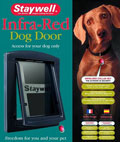 The Staywell Infra-Red Dog Door
The manual locking system comes with 4 ways to lock it:
Now, they are kinda pricey. They range from $150-$300 depending on the manufacture of the infrared door.So why should you purchase this nifty doggy device? Simple…the infra-red dog door is set-up to only open with the key so you are ensured that no surprises will be in your home. Protecting your home is a important part of life and the infrared dog door will keep all unwanted menaces out of your home and allow your dog free access to outdoors.
This dog door can fit in windows, walls, or doors and gives you more control over your dog’s movements allowing you to install them though out the house. If company is coming you can put up and deny them access while you visit or simply let them in and out to use the restroom. This device truly will help you and your dog; giving them more freedom and you more space.
Check out the Staywell Infra-Red Dog Door